
Traveler FYI's, FAQ's, to-do's
Updated June 4, 2026
Click on the boxes below for "the basics" along with links in blue therein for additional information.
Listings generated with assistance from Copilot AI.
🛂 Airport Security
Security procedures are similar to U.S. airports, but a few UK‑specific rules are worth noting.
- Liquids: Standard 100ml rule applies
- Electronics: Laptops/tablets often must be removed
- Medications: Keep in original containers
- Boarding passes: Digital passes widely accepted
- UK arrival: Passport control can be busy — have documents ready
More information: Heathrow Airport Security Overview
📱 Cell Phones & Wi‑Fi
Most U.S. smartphones work in the UK, but you should plan ahead to avoid expensive roaming charges. You have several reliable options:
- Use your carrier’s international plan or day‑pass — major U.S. carriers offer these, but costs vary.
- Rely on free Wi‑Fi — widely available in hotels, museums, cafés, and public spaces.
- Buy a UK SIM or eSIM — often the cheapest way to get data, with options from EE, Vodafone, Three, and others.
- Use an eSIM service — modern phones support eSIMs, and providers like Airalo or BNESIM offer easy setup and good coverage. UK Travel Planning Travlists
More information: Airalo (eSIM provider) stable, long‑running, and widely recommended for UK travel.
💳 Credit Cards
London is extremely card‑friendly, and most payments are made using tap‑to‑pay. U.S. travelers generally have no trouble using their cards, but it’s worth preparing so you avoid surprises. You have several reliable considerations:
- Visa and Mastercard work virtually everywhere in London.
- American Express is accepted in many shops and restaurants, but not all.
- Consider notifying your bank before traveling so your card isn’t flagged for unusual activity. The actual requirement to do this varies across credit card providers.
- Check for foreign transaction fees — some cards charge 1–3% on every purchase.
- Use tap‑to‑pay whenever possible; London is one of the most contactless‑friendly cities in the world.
- Have a backup card in case one network is temporarily declined.
More information: Chase: Foreign Transaction Fees - a stable, general‑purpose explanation of how foreign transaction fees work.
💷 Currency Exchange & Rates
The UK uses the British Pound (GBP), and most travelers find that using ATMs and credit cards gives the best overall value. A little preparation goes a long way toward avoiding unnecessary fees. Here are the most reliable guidelines:
- Use ATMs (“cashpoints”) in London — they typically offer the best exchange rate compared to airport kiosks or hotel desks.
- Avoid currency exchange counters, especially at airports, which often have poor rates and high fees.
- Decline “dynamic currency conversion” if a card machine asks whether to charge you in USD — always choose GBP for a better rate.
- Use credit cards for most purchases — Visa and Mastercard usually provide excellent exchange rates.
- Carry a small amount of cash for markets, small cafés, or places that don’t accept cards (rare, but possible).
- Check the exchange rate before you travel so you have a sense of what things cost; rates fluctuate daily.
More information: Currency exchange website.
✅ Early Voting for Minnesota Primary on August 11
The state-wide Minnesota primary occurs on Tuesday, August 11 while we are in London. You can vote in person or by mail starting June 26.
More information: Instructions for early voting from the Minnesota Secretary of State's Office.
🔌 Electricity: Adapters & Converters
Most U.S. devices work in the UK with the correct plug adapter, but some appliances may need a voltage converter.
- UK plug type: Type G (three rectangular prongs)
- Voltage: 230V (U.S. is 120V)
- Most phone/laptop chargers: Dual‑voltage → adapter only
- Hair dryers, curling irons: Often not dual‑voltage → may require a converter or UK‑specific model
- Hotels: Usually have limited outlets — bring at least one adapter
More information:
Amazon
🚆 Heathrow → Central London Transportation
Heathrow is well‑connected to central London, and travelers have several fast, reliable options. Your choice usually depends on budget, luggage, and where you’re staying. Here are the most dependable ways to get into the city:
- Elizabeth Line — Direct trains from Heathrow to central London (including Farringdon, Liverpool Street, and Tottenham Court Road). Comfortable, frequent, and usually the best balance of speed and cost.
- Heathrow Express — The fastest option (≈15 minutes) to Paddington Station. More expensive but excellent if you want a quick, no‑stops ride.
- London Underground (Piccadilly Line) — The most economical option. Slower (≈50–60 minutes) but direct to many central stations.
- Taxi or Uber — Door‑to‑door convenience, especially with luggage or groups. Travel time varies widely (≈45–70 minutes) depending on traffic.
- Pre‑booked car services — Reliable for groups or travelers wanting a fixed price and meet‑and‑greet service.
More information: Heathrow Transport Options
😴 Jet Lag
London is 6 hours ahead of the Central Time Zone (this will be true in August). Traveling from the U.S. to the UK usually means an overnight flight and a morning arrival.
- Stay awake until local evening to adjust faster
- Hydrate during the flight
- Light exposure: Get outside early in the day
- Avoid long naps on arrival day
- Melatonin: Some travelers find it helpful
More information: CDC Jet Lag Tips
🎭 London - Events, Museums, Concerts, Shows, Sports et al
London has an incredible range of events year‑round — from world‑class museums and theatre to concerts, festivals, and major sporting events. These trusted websites keep their listings updated daily.
- Time Out London — The classic “what’s on” guide with listings for exhibitions, concerts, theatre, food events, pop‑ups, and festivals.
- VisitLondon.com (Official Tourism Site) — The city’s official guide with major events, museum exhibitions, theatre, and seasonal highlights.
- Eventbrite London — Thousands of local events including concerts, workshops, lectures, walking tours, and community happenings.
- Ticketmaster London — Concerts, arena shows, West End theatre, comedy, and major sporting events.
- LondonTheatre.co.uk — Dedicated listings for West End musicals, plays, and touring productions.
- Major Sporting Events in London (Guide) — Overview of football, rugby, tennis, cricket, NFL London games, and more.
📏 Metric System (sort of)
The UK officially uses the metric system, but visitors will still encounter a mix of metric and traditional imperial units in everyday life.
- Weather: Celsius (°C)
- Distance on roads: Miles (not kilometers)
- Speed limits: Miles per hour (mph)
- Height & weight (people): Often feet/inches and stones/pounds
- Food & drink: Mostly metric (grams, liters), but pints remain standard for beer
- Fuel: Sold in liters
- Temperature indoors: Celsius
- Maps & walking directions: Usually miles or minutes
What this means for travelers: You’ll see miles on signs, Celsius in weather apps, and pints in pubs — a friendly hybrid system that’s easy to navigate once you know what to expect.
Quick conversions:
- 1 mile ≈ 1.6 km
- 1 pint (UK) ≈ 20 oz (larger than a U.S. pint)
- 20°C ≈ 68°F25
- 1 stone = 14 pounds
🎒 Packing
London weather is variable — pack for layers and comfort.
- Light rain jacket
- Comfortable walking shoes
- One dressier outfit for concerts or dinners
- Medication & essentials in carry‑on
- Small daypack for daily outings
More information: Visit Britain packing tips
🛂 Passport & ID Reminders
Make sure your documents are ready well before departure.
- Passport validity: Must be valid for the entire trip
- Photocopies: Keep digital and paper copies
- Emergency contact card: Keep in your wallet
- Real ID: Not needed for international flights
More information: U.S. State Department Passport Guidance
🛡️ Safety & Etiquette
London is generally safe, but big‑city awareness is helpful.
- Keep bags zipped in crowded areas
- Look both ways — traffic comes from the right
- Queue politely (very British)
- Avoid blocking sidewalks
- Use crosswalks whenever possible
More information: Metropolitan Police Visitor Safety Tips
💁 Tipping Norms
Tipping in London is more modest and more situational than in the U.S., and in many cases it isn’t expected at all. Here are the most reliable guidelines for visitors:
- Restaurants — A 10–12.5% service charge is often added automatically to the bill. If it’s included, no additional tip is expected. If it’s not included and service was good, adding 10–12% is customary.
- Pubs and bars — Tipping is not expected. Locals rarely tip for drinks at the bar.
- Cafés and coffee shops — Not expected, though a small “keep the change” gesture is fine if you feel like it.
- Taxis and rideshares — Most people simply round up to the nearest pound or add a small amount for convenience.
- Hotels — Optional. You may tip porters (£1–£2 per bag) or housekeeping (£2–£3 per night), but it’s not required.
More information: Condé Nast guide
🚆 Traveling on the Tube
London’s Underground is fast, safe, and easy to navigate.
- Contactless cards/phones work automatically (see below).
- Stand on the right on escalators
- Mind the gap when boarding
- Peak hours: 7–9 AM and 4–6 PM
- Maps: Posted everywhere; Google Maps works perfectly
More information: The basic London Transport site is here. it has multiple pages; below are just a few. The assumptions are that our group will be (1) staying in Zone 1 (which includes St. Paul's), (2) using transit daily, (3) traveling mostly between St. Paul’s, restaurants, and sightseeing, and (4) carrying U.S. credit cards and phones.
- VIsitor maps
- Journey planner
- How to pay. This page is thorough but also lengthy. For a group of U.S. travelers staying near St. Paul’s and using transit daily:
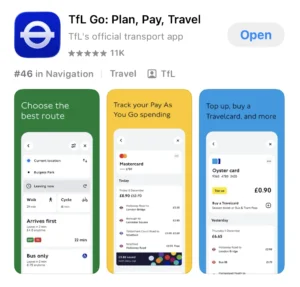
- Primary recommendation: Use contactless tap‑to‑pay with your phone or credit card. No need to buy anything — just tap your card/phone (see iPhone screenshot below). Daily cap for Zones 1–2 is automatically applied. Works seamlessly on the Tube, buses, and the Elizabeth line. Besides managing payment the phone app includes other features like those described above including a map and journey planner.
- Backup: Buy an Oyster card at Heathrow or any Tube station.
- Avoid: Cash fares and unnecessary Visitor Oyster purchases.
- Fares. As noted above we are (likely) to be within Zone 1 most of the time.
💷 VAT Basics
The UK uses a Value Added Tax (VAT) on most goods and services.
- 20% VAT is included in most prices
- Tourists cannot reclaim VAT post‑Brexit
- Restaurant bills: Service charge may be included
- Receipts: Show VAT breakdown
More information: UK Government VAT Overview
🧼 Washcloths
Many UK hotels do not provide washcloths.
- Bring your own if you prefer using one
- Quick‑dry travel cloths pack easily
- Hotels may provide on request, but not guaranteed
🌦️ Weather (Early August)
Early August is one of London’s warmest and most pleasant periods, with mild temperatures, long daylight hours, and a mix of sun and light showers.
-
Typical daytime highs: around 23°C / 73°F
-
Evening lows: 13–15°C / 55–59°F
-
Rain: Light, occasional showers; not usually all‑day rain
-
Sunshine: One of London’s brighter months, with frequent sunny intervals
-
Humidity: Moderate and comfortable
-
Wind: Light breezes, generally mild
-
Packing tip: Layers + a light rain jacket work best
More information: BBC Weather – London 14‑day outlook